Welcome to I.CH Motion Co., Ltd
- All
- Product Name
- Product Keyword
- Product Model
- Product Summary
- Product Description
- Multi Field Search

Views: 0 Author: Site Editor Publish Time: 2026-04-17 Origin: Site


When selecting a gearbox for industrial applications, understanding the internal architecture becomes essential for making informed engineering decisions. Whether you are specifying components for automated manufacturing systems, robotics, or power transmission applications, the interplay between gears, shafts, bearings, and housing determines overall performance, efficiency, and longevity. This comprehensive guide examines the structural fundamentals of two dominant gearbox architectures—spur and planetary—while exploring the critical factors of material engineering, precision manufacturing, noise reduction, and component integration that distinguish high-quality transmission systems.
A gearbox serves as the mechanical translator between power sources and driven equipment, manipulating the relationship between rotational speed and torque output. The fundamental gear ratio—the relationship between the number of teeth on meshing gears—determines how the gearbox transforms input characteristics to meet application requirements. When a smaller pinion gear drives a larger gear, the output rotates slower while torque increases proportionally. Conversely, larger pinions driving smaller gears produce higher rotational speeds at reduced torque.
The necessity of this transformation arises from the inherent inverse relationship between rotational speed and turning force. Electric motors and engines typically produce high rotational speeds with insufficient turning force to move heavy loads directly. Gearboxes bridge this gap by providing mechanical advantage through carefully engineered gear trains.
Spur gearboxes represent the simplest and most fundamental form of mechanical power transmission. The defining characteristic of spur gears lies in their tooth geometry: straight teeth cut parallel to the axis of rotation, resembling small wheels with evenly spaced projections around their circumference. When two spur gears mesh, their teeth engage directly and transfer rotational motion between parallel shafts.
The power transmission process begins when the motor-driven input shaft rotates the pinion—the smaller of the two meshing gears. As the pinion teeth engage the teeth of the larger gear mounted on the output shaft, they force the output shaft to rotate at a reduced speed proportional to the gear ratio.
The spur gearbox assembly comprises several essential elements that work in concert to deliver reliable power transmission:
Spur Gears form the heart of any spur gearbox system. These toothed mechanical elements transmit rotational motion and torque between shafts through precise mesh engagement. In spur configurations, gears feature straight-cut teeth that engage along the entire tooth face width simultaneously. For more information on precision spur gears, see Spur Gear.
Shafts serve as the structural backbone supporting gears while facilitating power transfer through the system. Input shafts connect to the prime mover and receive initial rotational energy, while output shafts deliver modified power to driven equipment.
Bearings support rotating shafts while minimizing friction and maintaining precise alignment under load. Bearing selection significantly impacts gearbox efficiency, noise characteristics, and service life.
Housing encloses and protects all internal components from contamination while maintaining precise alignment between shafts and gears. The housing also serves as the lubricant reservoir, essential for reducing friction between meshing teeth.
Seals prevent lubricant leakage while blocking contaminants from entering the gearbox interior.
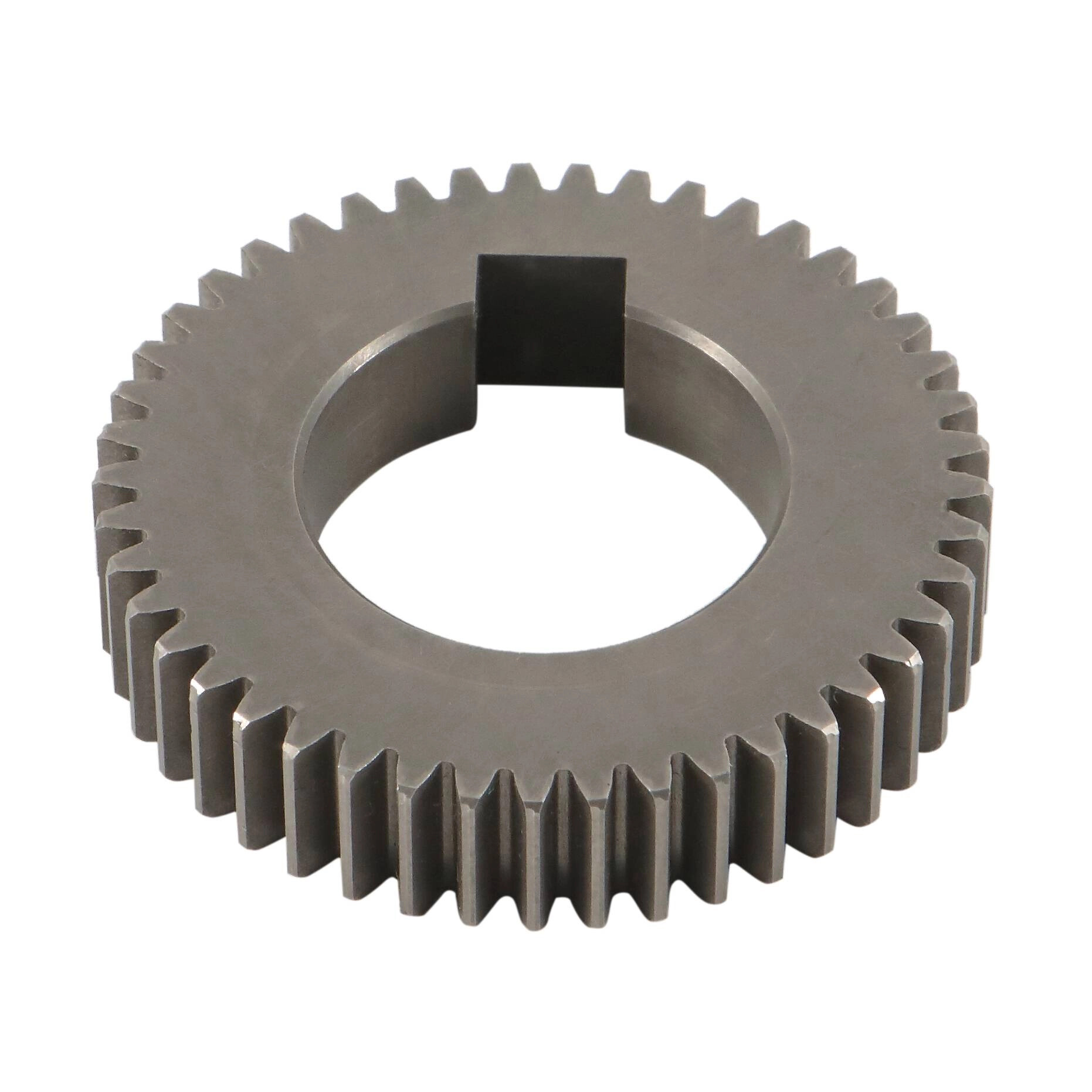
Spur gearboxes offer several distinct advantages that have sustained their widespread industrial adoption:
Simple, straightforward design facilitates cost-effective manufacturing
High efficiency, typically exceeding 95%
High load-carrying capacity relative to size
Easy maintenance and repair
However, spur gearboxes present certain limitations:
Higher noise levels compared to helical gear alternatives, particularly at elevated operating speeds
Power transmission exclusively between parallel shafts
The abrupt tooth engagement characteristic produces clicking sounds
Typical applications for spur gearboxes include industrial machinery, conveyor systems, packaging equipment, machine tools, consumer products, and household appliances.
Planetary gearboxes—also known as epicyclic gearboxes—employ a fundamentally different architectural approach. Unlike the straightforward parallel-shaft arrangement of spur gearboxes, planetary systems distribute power transmission across multiple gear paths, enabling dramatically higher torque density within compact form factors.
The term "planetary" derives from the visual similarity between this gear arrangement and the solar system model, where a central "sun" gear is surrounded by smaller "planet" gears orbiting around it.
The planetary gearbox architecture comprises four primary components that interact through precise geometric relationships:
Sun Gear occupies the central position within the planetary arrangement and serves as the typical power input element. The sun gear features external teeth that mesh with the surrounding planet gears.
Planet Gears orbit around the sun gear while simultaneously rotating on their own axes. These intermediate gears—typically numbering three to four in standard configurations—simultaneously mesh with both the sun gear and the internal teeth of the ring gear.
Internal Ring Gear forms the outer boundary of the planetary gear train with teeth cut on its inner circumference. The ring gear meshes with the planet gears, providing the reaction element that enables torque multiplication. For precision internal ring gears, visit Internal Ring Gear.
Planet Carrier connects and supports all planet gears on their individual shafts while maintaining precise equidistant spacing around the central axis. The carrier rotates as planet gears orbit, serving as the typical power output element.
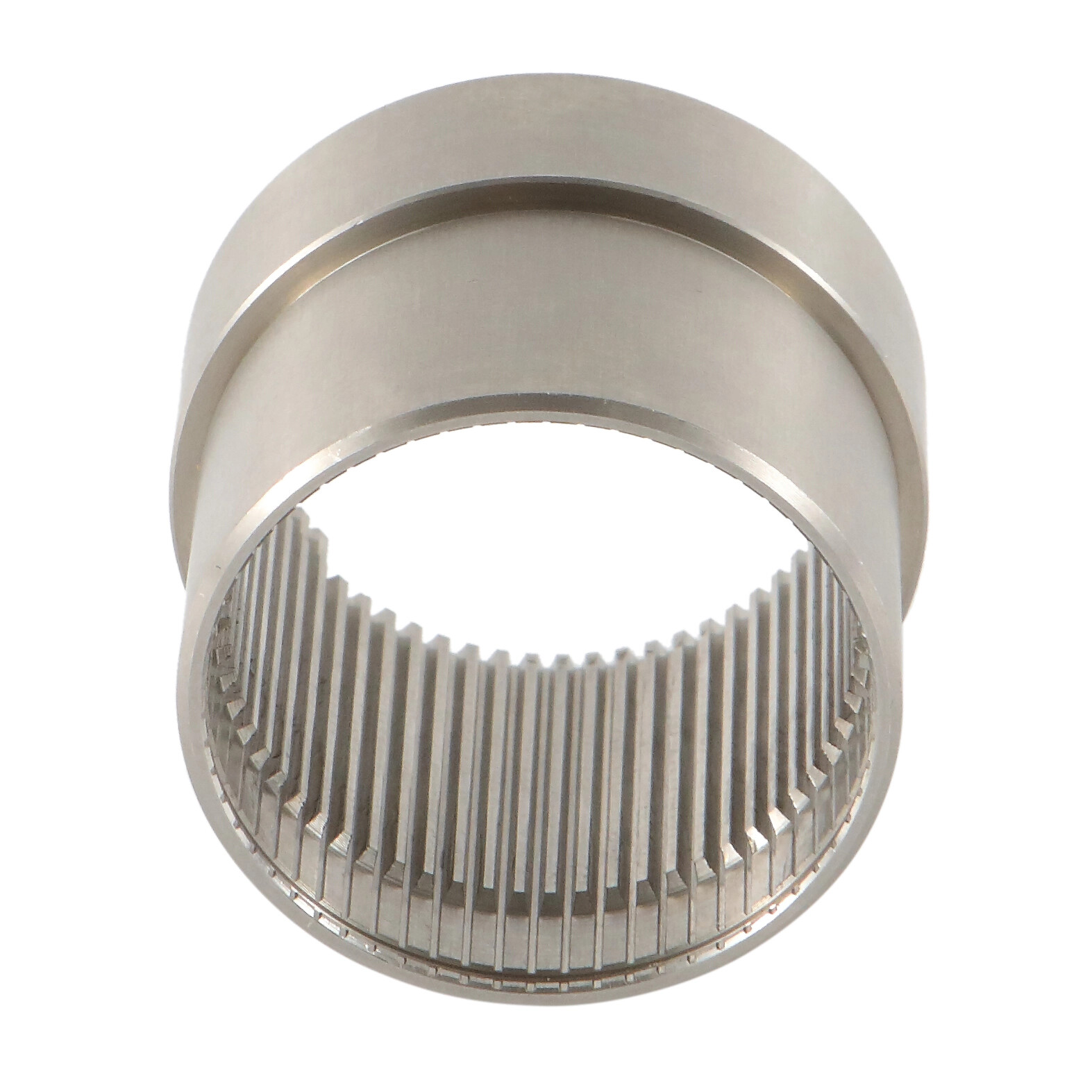
The distributed-load architecture of planetary gearboxes delivers several compelling performance advantages:
Multiple simultaneous gear engagements share applied loads
Coaxial input-output arrangement simplifies integration
High reduction ratios achievable in single-stage configurations
Compact packaging for equivalent power ratings
These characteristics make planetary gearboxes the preferred choice for high-performance applications including industrial robotics, servo systems, aerospace actuation mechanisms, medical device drives, and heavy construction equipment.
The performance characteristics of gearbox components depend critically on material selection decisions that balance strength requirements, wear resistance, weight constraints, and cost considerations.
We offer gear assemblies manufactured from a comprehensive range of materials:
| Material Grade | Category | Typical Applications |
|---|---|---|
| SAE 1045 | Carbon Steel | General machinery, low-stress applications |
| SAE 4140 | Chromium-Molybdenum Steel | Heavy-duty gearboxes, automotive |
| SAE 4340 | Nickel-Chromium-Molybdenum Steel | Aerospace, high-load applications |
| SCM 440 | Chrome-Molybdenum Steel | Industrial gearboxes |
| SNCM 420 | Nickel-Chromium-Molybdenum Steel | Precision components |
| 20CrMo | Low-carbon alloy steel | Transmission gears, shafts |
| 16MnCr5 | Chrome steel | Automotive, industrial machinery |
| 17-4PH | Precipitation Hardening Stainless | Medical devices |
Heat treatment processes transform the mechanical properties of gear materials:
| Process | Characteristics |
|---|---|
| Normalizing | Uniform mechanical properties, improved machinability |
| Quenched & Temper | Balanced hardness and toughness |
| Nitriding | Excellent wear resistance, minimal distortion |
The dimensional accuracy and surface finish of gear teeth directly determine mesh quality, efficiency, noise characteristics, and service life.
Hobbing: The most widely used gear production method for parallel-axis gears, producing gear teeth efficiently across a wide range of sizes.
Gear Shaping: Valuable for producing internal gears and gears with unusual profiles.
Gear Grinding: Provides the highest precision gear finishing available, eliminating heat treatment distortions.
Powder Metallurgy: Excellent for complex geometries and internal features.
| Manufacturing Method | Applications |
|---|---|
| Hobbing | External gears, high-volume production |
| Powder Metallurgy | Complex geometries, internal features |
| Gear Shaping | Internal gears, special profiles |
| Gear Grinding | High-precision finishing |
We utilizes professional design software for gear optimization:
AutoCAD
SolidWorks
KISSsoft
24/7 engineering support is available for design consultation and application assistance.
We manufactures gear components to ISO 6-9 accuracy grades as standard.
| ISO Grade | Application Examples |
|---|---|
| ISO 6 | Precision machine tools, robotics |
| ISO 7-8 | General industrial machinery, automotive |
| ISO 9 | Low-speed, lightly loaded applications |
Understanding noise generation mechanisms enables engineers to implement effective noise reduction strategies:
Gear Meshing Noise: As gear teeth enter and exit contact, impacts generate vibration that propagates through the gear structure and housing.
Bearing Noise: Emerges from rolling element interactions with raceway surfaces.
Aerodynamic Noise: Arises from oil churning and windage effects in high-speed gearboxes.
Structural Resonance: Occurs when gear mesh excitation frequencies coincide with natural frequencies of housing or shaft structures.
Precision Manufacturing: Minimizes gear mesh excitation by reducing tooth spacing errors and profile deviations. High-precision ground gears exhibit significantly lower noise levels.
Profile Modifications: Including tip relief and lead crowning improve load distribution and reduce stress concentrations that generate vibration.
Material Selection: Certain materials naturally damp vibrations better than others.
Proper Assembly and Alignment: Misaligned gears create uneven load distribution and generate excessive noise.
Lubrication: Adequate lubrication reduces friction, dampens impact forces, and carries away heat and wear debris.
Internal ring gears, commonly used in planetary gearboxes, present unique noise challenges due to their geometry. The enclosed tooth space can amplify sound, making precision manufacturing and proper assembly critical for these components.
High-performance gearbox systems emerge from careful integration of components designed to function as a unified mechanical system.
Gearbox Parts provide complete component packages for gearbox assembly or repair. These kits include matched components designed for compatible operation. For comprehensive gearbox parts solutions, see Gearbox Parts.
Gear Assembly for Planet or Spur Gearbox represents pre-assembled gear sets ready for direct installation. These assemblies combine multiple precision components into tested packages, eliminating the complexity of sourcing and assembling individual components. For precision gear assemblies, visit Gear Assembly for Planet or Spur Gearbox.
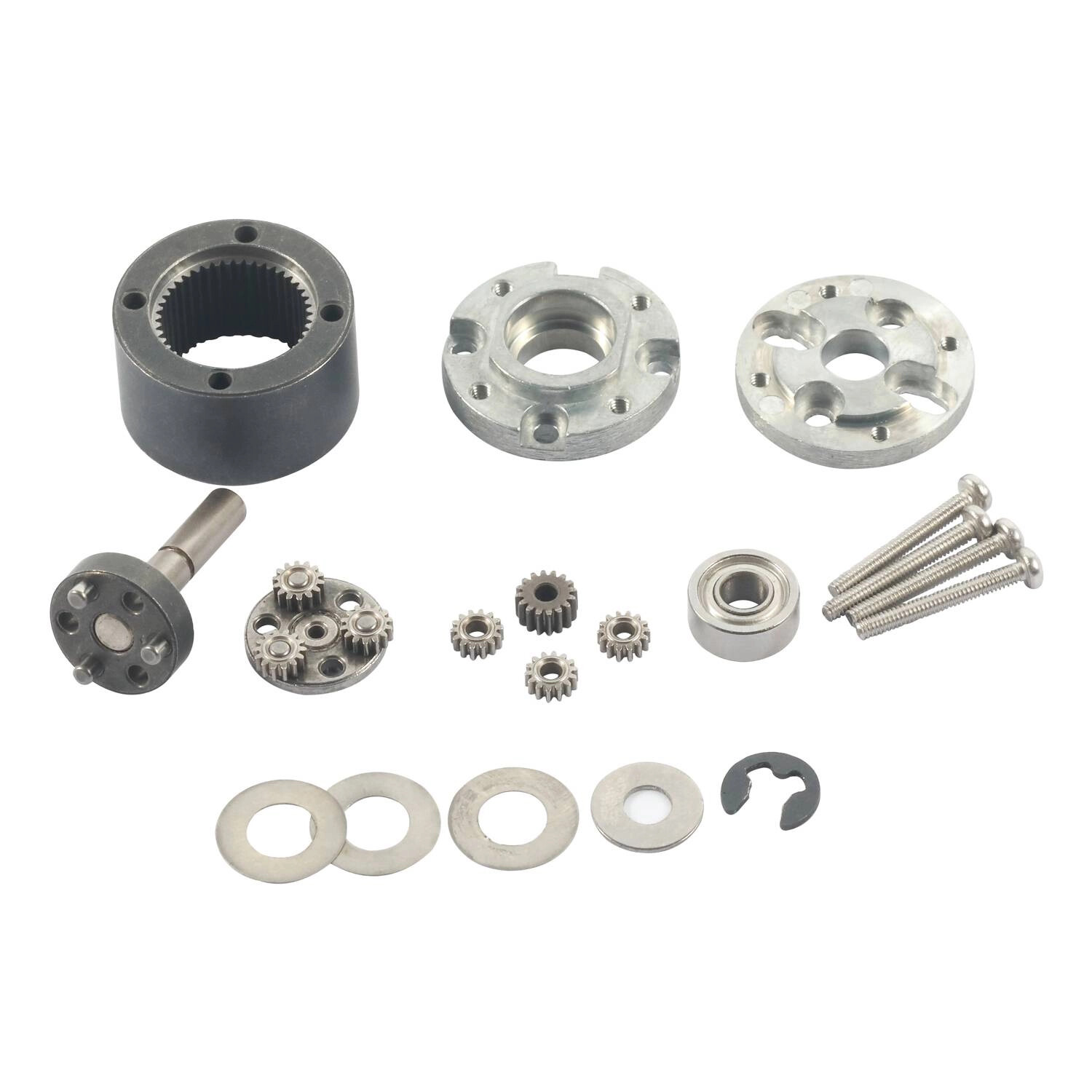
The Internal Ring Gear serves as the foundational structural element in planetary gearbox architectures:
| Parameter | Specification |
|---|---|
| Module Range | 0.15 minimum |
| Outside Diameter | Ø12 - Ø100 |
| Accuracy Grade | ISO 6-9 |
| Manufacturing Methods | Hobbing, Powder Metallurgy, Gear Shaping, Gear Grinding |
Applications: Heavy-duty construction machinery, high-speed precision machining tools, high-reduction-ratio planetary gear drives, industrial clutch assemblies.
The Spur Gear remains the fundamental building block of simple gearbox architectures:
| Parameter | Specification |
|---|---|
| Module Range | 0.15 minimum |
| Outside Diameter | Ø2.5 - Ø60 |
| Accuracy Grade | ISO 6-9 |
| Manufacturing Methods | Hobbing, Powder Metallurgy, Gear Shaping, Gear Grinding |
Features: Most widely used gear type, cost-effective, zero axial force during operation, high-quality consistency.
Applications: General transmission components, offshore drilling, industrial machinery.
Selecting between spur and planetary gearbox architectures requires careful evaluation of application requirements:
| Characteristic | Spur Gearbox | Planetary Gearbox |
|---|---|---|
| Architecture Complexity | Simple parallel shaft arrangement | Complex epicyclic gear train |
| Torque Density | Moderate, single load path | High, distributed across multiple gears |
| Reduction Ratio Range | 1:1 to 100:1 (multiple stages) | 3:1 to 500:1 (single stage possible) |
| Efficiency | 90-98% | 90-97% per stage |
| Noise Characteristics | Higher due to abrupt engagement | Lower from gradual engagement |
| Packaging Efficiency | Larger diameter for equivalent power | Compact coaxial design |
| Cost | Lower manufacturing cost | Higher cost from complex components |
| Maintenance | Straightforward, fewer parts | More complex assembly |
| Typical Applications | General industrial machinery | Robotics, aerospace, precision automation |
Effective gearbox selection begins with comprehensive analysis of application requirements:
Load Characteristics: Torque magnitude, shock loading severity, and load direction determine minimum strength requirements.
Speed Requirements: Establish baseline reduction ratio needs while influencing efficiency considerations.
Duty Cycle: Continuous operation, intermittent loading, or shock load conditions affect rating requirements.
Environmental Conditions: Temperature, contamination, and humidity influence material and seal selections.
Noise Requirements: Application-specific noise limits may dictate manufacturing precision levels.
Cost-sensitive applications
Simple parallel shaft requirements
Moderate torque and speed requirements
Applications where maintenance simplicity is valued
General industrial machinery
High torque density requirements
Compact packaging constraints
High reduction ratios in single stage
Precision motion control applications
Robotics and servo systems
Understanding spur and planetary gearbox architecture enables engineers to make informed decisions when specifying components for industrial applications. Both architectures offer distinct advantages suited to different application requirements, with material selection, manufacturing precision, and component integration determining ultimate performance.
We provides comprehensive solutions including individual spur gears, internal ring gears, gear assemblies, and complete gearbox parts packages—all manufactured to ISO 6-9 accuracy standards using quality materials and professional design software support.
For applications requiring compact, high-torque solutions, planetary architectures with precision internal ring gears deliver exceptional performance. For cost-sensitive, simple transmission requirements, spur gearbox configurations with quality spur gears provide reliable, efficient operation.
What is the main difference between spur and planetary gearboxes?
Spur gearboxes use simple parallel shaft arrangements with external gears, while planetary gearboxes use complex epicyclic arrangements with sun gear, planet gears, and internal ring gear.
What materials are available gear components??
We offers SAE 1045, SAE 4140, SAE 4340, SCM 440, SNCM 420, 20CrMo, 16MnCr5, and 17-4PH for medical device applications.
What accuracy grades does the company manufacture to?
ISO 6-9 accuracy grades as standard.
What are the dimensional specifications for internal ring gears?
Module 0.15 minimum, outside diameter Ø12-Ø100.
What are the dimensional specifications for spur gears?
Module 0.15 minimum, outside diameter Ø2.5-Ø60.
What manufacturing methods are used?
Hobbing, powder metallurgy, gear shaping, and gear grinding.
What heat treatment options are available?
Normalizing, quenching and tempering, and nitriding.
What design software is used?
AutoCAD, SolidWorks, and KISSsoft for gear design optimization.