Welcome to I.CH Motion Co., Ltd
- All
- Product Name
- Product Keyword
- Product Model
- Product Summary
- Product Description
- Multi Field Search

Views: 0 Author: Site Editor Publish Time: 2026-01-26 Origin: Site


Helical gears play a crucial role in many mechanical systems. But what exactly are they used for? These gears are essential for transferring power efficiently while minimizing noise and vibration. In this article, we will explore their unique design, applications, and why they are preferred over other gear types. You will learn how helical gears work and their advantages in different industries.
Helical gears are cylindrical gears with teeth cut at an angle to the axis of rotation. This angled tooth design allows the gears to engage gradually as they rotate, providing smoother and quieter operation compared to other gear types, such as spur gears. The helical gear's teeth are arranged in a spiral pattern, which helps distribute the load across multiple teeth simultaneously. This distribution of force makes them more efficient at transmitting power while also reducing the risk of wear and damage to individual teeth.
Unlike spur gears, where the teeth are parallel to the axis of rotation, the helical design allows for a larger contact ratio. This means that more teeth engage at once, resulting in higher load capacity, reduced wear, and smoother operation. As the teeth gradually mesh, they transmit power more evenly, which minimizes shock loads and reduces vibration. This gradual engagement is a major advantage over spur gears, which experience abrupt contact, resulting in higher noise and vibration.
Due to these benefits, helical gears are particularly suitable for high-speed and heavy-duty applications. In environments where high torque and smooth performance are critical, such as in automotive gearboxes, industrial machinery, and robotics, helical gears excel. They also perform well in environments where noise reduction is a priority, thanks to their quiet operation.
Helical gears are highly versatile, as they can be used to transfer power between both parallel and non-parallel shafts. This flexibility makes them ideal for a wide range of industries, from aerospace to manufacturing. Their ability to efficiently transmit power while maintaining durability and smooth operation makes them the preferred choice for demanding applications that require reliability and efficiency. Moreover, the advanced design and ability to distribute forces across multiple teeth contribute to the overall longevity and performance of the gear system.
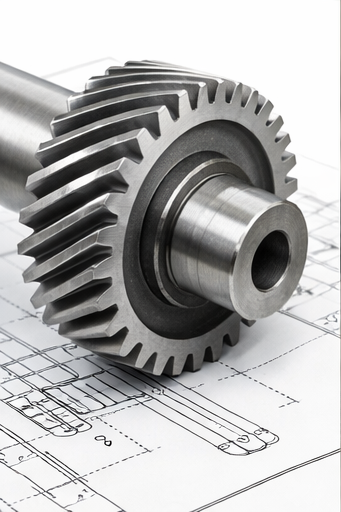
Helical gears operate by transferring rotational motion between two shafts. The teeth of a helical gear are set at an angle to the axis of rotation, causing them to mesh gradually as they turn. This gradual engagement helps reduce noise and vibration, as opposed to spur gears, where teeth make contact suddenly, often resulting in more noise and shock.
The angled teeth of helical gears also allow them to carry more load than spur gears. Since the force is distributed across more teeth, helical gears experience less wear and tear, which increases their lifespan. However, one challenge with helical gears is the axial thrust they generate due to the angled teeth. This thrust needs to be managed using bearings to ensure smooth operation and prevent excessive wear.
Helical gears come in two main types: single and double helical gears.
● Single Helical Gears: These gears have teeth cut in one direction along the circumference of the gear. While simple to manufacture, they generate axial thrust during operation, which requires special bearings to absorb the force and maintain smooth performance.
● Double Helical Gears (Herringbone Gears): These gears have two sets of teeth that are cut in opposite directions. The opposing teeth cancel out the axial thrust, making double helical gears ideal for high-torque applications where thrust needs to be minimized. These gears provide greater load capacity and smoother operation, although they are more complex and expensive to produce.
Helical gears differ from other types of gears, such as spur gears, bevel gears, and worm gears. Spur gears have straight teeth that mesh directly, while bevel gears are designed to transfer power between shafts that intersect at a 90-degree angle. Worm gears provide significant reduction ratios, but their efficiency is generally lower than helical gears due to the friction created by the sliding teeth.
One of the most common applications of helical gears is in automotive transmissions. Helical gears are preferred in car gearboxes because they provide smooth and efficient power transmission with less noise and vibration. The gradual engagement of the teeth results in quieter operation compared to spur gears, making for a more comfortable driving experience.
Helical gears are also used in differentials and driveshafts, where their ability to handle high-speed rotations and heavy loads is critical. Their smooth operation helps reduce wear on components, extending the lifespan of the vehicle’s drivetrain.
Helical gears are widely used in industrial machinery due to their ability to handle high-torque applications. They are commonly found in heavy-duty equipment such as elevators, compressors, conveyors, and pumps. In these applications, the gears must operate smoothly and quietly, especially in environments where noise and vibration are a concern.
For example, in elevators, helical gears help ensure smooth and efficient movement of the cabin. Similarly, in compressors, helical gears are used to manage the pressure and airflow, enabling reliable operation in industries such as oil and gas, manufacturing, and power generation.
Helical gears play an essential role in material handling systems and robotics, where precision and reliability are paramount. In robotic arms and CNC machinery, helical gears provide the required torque and speed control for accurate movements. The ability of helical gears to transmit power smoothly and quietly makes them ideal for use in these advanced systems, where performance and precision are critical.
In automated material handling systems, helical gears ensure the consistent movement of goods through production lines. They are also used in conveyor belts that transport heavy loads, providing the necessary torque to move goods efficiently without excessive wear on the equipment.
Helical gears have several advantages over spur gears. The primary benefit is their ability to provide a smoother and quieter operation. Spur gears, which have teeth cut parallel to the axis of rotation, tend to create more noise and vibration because the teeth engage abruptly. In contrast, the angled teeth of helical gears mesh gradually, which helps reduce the impact forces and resulting noise.
Helical gears also have a higher load capacity compared to spur gears. Since the load is distributed across more teeth, helical gears experience less wear and tear, which increases their durability and lifespan. This makes them a better choice for high-torque applications.
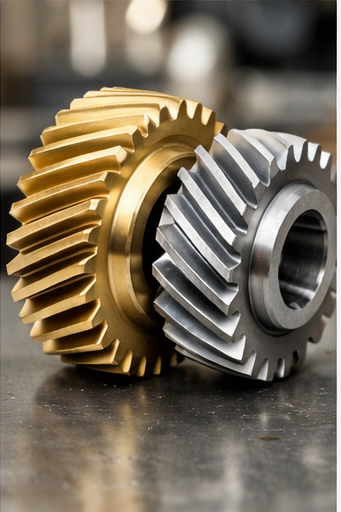
One of the key benefits of helical gears is their high load capacity. The angled teeth of helical gears allow for a greater contact area between the gears, which distributes the load more evenly. This reduces the stress on individual teeth, preventing excessive wear and increasing the gear's overall durability.
Helical gears are particularly well-suited for applications where heavy loads and high torque are involved. Their ability to handle these demands makes them ideal for industries such as automotive, mining, and manufacturing, where reliable and durable components are essential for smooth operations.
Helical gears are also ideal for high-speed applications. Their smooth operation, reduced friction, and ability to handle high speeds make them a preferred choice in automotive transmissions, industrial machinery, and robotics. The gradual engagement of the teeth reduces the risk of overheating, which can occur in other gear types, such as worm gears.
Helical gears are typically manufactured using casting and forging techniques. Casting involves pouring molten material into a mold to form a gear blank, which is then machined to the desired shape. This method is suitable for producing large gears used in heavy-duty applications, such as power plants and steel mills.
Forging, on the other hand, involves shaping metal using force. The metal is heated and then pressed or hammered into the desired shape. Forging is often used to produce gears that require high strength and durability, such as those found in automotive transmissions and marine gearboxes.
Precision cutting techniques such as hobbing, shaping, and broaching are employed to create the intricate tooth profiles of helical gears. These methods ensure that the teeth are cut with high accuracy, which is essential for smooth operation. Hobbing is typically used for cutting external gears, while shaping and broaching are better suited for creating gears with internal teeth.
Hobbing is a highly efficient method used for medium- to large-volume production. The gear blank is rotated while a cutting tool (hob) moves along the teeth to shape the gear. Shaping is used to produce more complex gear designs, and broaching is often used for small gears requiring high precision.
After the gears are cut, they often undergo post-manufacturing processes to improve their surface finish and enhance their operational performance. Techniques such as grinding, lapping, and honing help reduce surface roughness, improve tooth geometry, and increase the overall efficiency of the gear.
For high-performance applications, gears may also undergo heat treatment to improve their hardness and wear resistance. This is particularly important for gears used in high-speed or high-load environments, where durability and efficiency are critical.
Manufacturing Method | Advantages | Typical Applications |
Casting | Cost-effective for large gears | Heavy-duty machinery, power plants |
Forging | High strength, durable | Automotive transmissions, marine gearboxes |
Hobbing | Efficient for medium to large runs | Industrial applications, automotive gears |
Shaping | Suitable for complex designs | CNC machinery, robotics |
Broaching | High precision for small gears | Aerospace, medical equipment |
Choosing the right material for helical gears is essential for ensuring their strength and durability. Alloy steel is commonly used for high-load applications because of its strength, toughness, and wear resistance. Other materials such as cast iron and stainless steel may also be used, depending on the specific requirements of the application.
The material choice impacts the gear's ability to withstand high torque, extreme temperatures, and harsh environments. For example, gears used in automotive or aerospace applications need materials that can withstand high-stress conditions while maintaining performance.
The helix angle of a helical gear affects its performance in several ways. A larger helix angle can increase the gear's speed and smoothness but also generates more axial thrust, which requires proper bearing support. Conversely, a smaller helix angle reduces the axial thrust but may also limit the speed and efficiency of the gear.
When selecting a helical gear, it’s important to consider the operating conditions, such as speed, load, and noise requirements, to determine the optimal helix angle.
Lubrication plays a crucial role in maintaining the efficiency of helical gears. Proper lubrication reduces friction, which minimizes heat generation and prevents excessive wear on the teeth. High-quality lubricants also help extend the lifespan of the gear and ensure smooth operation, especially in high-speed or high-load applications.
Choosing the right lubricant depends on factors such as the operating temperature, the presence of contaminants, and the type of gear material. Regular maintenance and lubrication ensure that the gears operate efficiently and last longer.
Helical gears are essential in many industries for their smooth operation and high load capacity. They are ideal for high-speed and high-torque applications. These gears help reduce noise and wear, making them perfect for automotive and industrial machinery. Companies like I.CH Motion offer advanced helical gears, designed to deliver durability and efficiency, ensuring optimal performance in various systems.
A: A helical gear is used for power transmission between shafts, providing smooth and efficient operation in various mechanical systems. They are ideal for high-speed applications due to their ability to handle high loads and reduce noise.
A: Helical gears work by meshing angled teeth that engage gradually, providing smoother and quieter operation compared to spur gears. This design distributes the load across multiple teeth, enhancing efficiency and durability.
A: Helical gears are favored in automotive transmissions because of their quiet operation, high load capacity, and ability to handle high-speed rotations, ensuring smooth performance and extended gear life.
A: Helical gears offer several benefits over spur gears, including quieter operation, higher load capacity, and smoother engagement. The angled teeth reduce wear and improve efficiency, especially in high-speed applications.
A: The helix angle influences torque transmission, speed, and axial forces. A larger angle provides smoother motion and higher speed but increases axial thrust, requiring proper bearing support to maintain efficiency.
A: Helical gears are typically more expensive than spur gears due to their complex design and manufacturing process. However, they offer better performance, especially in high-speed and high-torque applications.