Welcome to I.CH Motion Co., Ltd
- All
- Product Name
- Product Keyword
- Product Model
- Product Summary
- Product Description
- Multi Field Search

Views: 0 Author: Site Editor Publish Time: 2026-02-09 Origin: Site


You see rapid changes in gearbox technology as electric vehicles transform the automotive world. Over the past five years, interest in multi-speed transmissions has surged as drivers like you demand more from electric vehicles. Single-speed systems once ruled the market, but multi-speed transmission evs now offer improved performance and efficiency. Check out the differences:
Gearbox Type | Application Area | Key Features |
|---|---|---|
Single-Speed | Mainstream EVs | Simplicity and cost-effectiveness |
Multi-Speed | High-Performance EVs | Wider gear ratios for better power delivery |
These advancements shape how you experience electric mobility every day.
You may notice that most electric vehicles in automotive use single-speed transmissions. This design works well because electric motors deliver maximum torque from zero RPM and maintain efficiency across a wide range of speeds. For daily driving, single-speed systems keep things simple and efficient. You get reliable acceleration and smooth operation without extra complexity.
However, single-speed gearboxes have some limits, especially when you want more from your EVs. Here are a few key points to consider:
Single-speed transmissions can struggle at high speeds, where efficiency drops and acceleration slows.
Multi-speed transmission EVs can offer better performance at both low and high speeds, but they add complexity and cost.
Adding more gears increases weight and friction losses, which can affect the drivetrain and battery range.
More parts mean more potential failure points and the need for advanced control software.
Space inside electric vehicles is valuable. Multi-speed systems take up more room, which can impact battery size and cabin comfort.
You see that while single-speed systems meet most needs, the push for better performance and efficiency is driving change.
Drivers and manufacturers now expect more from electric vehicles. You want faster acceleration, longer range, and better energy use. Multi-speed transmission EVs are rising to meet these demands. Here is why:
Multi-speed transmissions help electric vehicles use energy more efficiently.
They improve overall vehicle performance, especially in high-performance models.
You can drive farther on a single charge because these systems extend the driving range in certain situations.
The development of multi-speed transmissions is a major trend in the industry.
Automakers focus on integrating smart control systems to get the most out of every drive.
There is a strong push for fuel efficiency and lower emissions, which multi-speed systems support.
Industry trends show a clear shift. The market for electric vehicle transmissions is moving toward multi-speed gearboxes. This change comes from the demand for fuel-efficient and low-emission vehicles, new technology, and strict government emission rules. Leading companies now invest in advanced transmission systems to boost operational efficiency and performance.
Regulatory standards and government incentives also play a big role. Federal and state programs lower the cost of owning EVs, making it easier for automakers to invest in new technologies. Strict emission standards force manufacturers to create vehicles that meet tough benchmarks. This means you get cars that are not only cleaner but also more advanced.
You can see that the rise of multi-speed transmission EVs is not just about adding gears. It is about meeting your expectations for better performance, efficiency, and value in the next generation of electric vehicles.

You may wonder what a gearbox does in electric vehicles. In EVs, the gearbox connects the electric motor to the wheels. It helps control how power moves from the motor to the road. Unlike gearboxes in gas-powered cars, gearboxes in electric vehicles work with motors that deliver steady torque across a wide range of speeds. This means you do not need as many gears as in traditional cars.
Multi-speed transmissions in EVs use different gear ratios to match the motor’s speed with the wheels. When you drive at low speeds, the gearbox uses a lower gear for strong acceleration. At higher speeds, it shifts to a higher gear for better efficiency. This process helps the drivetrain use energy wisely and can improve battery life. You get smoother acceleration and better fuel efficiency because the system keeps the motor working in its best range.
Here is a table to show how multi-speed transmission EVs compare to single-speed systems:
Key Aspect | Description |
|---|---|
Multi-speed vs. Single-speed | Multi-speed transmissions enhance EV efficiency and performance compared to single-speed ones. |
Optimization | Gear ratios and shifting patterns must be optimized for electrical and mechanical efficiencies. |
Powertrain Losses | Most losses occur in the inverter, motor, and transmission, so engineers analyze these closely. |
Efficiency Analysis | Engineers study the motor, transmission, and inverter together to improve energy use. |
Design Variables | Gear ratios and shifting patterns help reduce energy use and boost acceleration. |
You see two main types of transmissions in electric vehicles in automotive markets: single-speed and multi-speed. Single-speed gearboxes have fewer parts and lower cost. They let the electric motor deliver full torque instantly and work well for most daily driving. These systems are lighter and more reliable because they have fewer moving parts.
Multi-speed transmission EVs add more gears. This increases complexity and cost, but you get better performance, especially at high speeds or when towing. Multi-speed transmissions keep the motor in its most efficient range, which can reduce energy use by up to 11%. You may notice a smoother ride and longer range in some cases.
Here is a quick comparison:
Feature | Single-Speed Gearbox | Multi-Speed Gearbox |
|---|---|---|
Efficiency | High in city driving | Improved at high speeds |
Cost and Weight | Lower cost, lighter | Higher cost, heavier |
Reliability | More reliable | More complex, needs more care |
Performance | Limited at high speeds | Better acceleration and top speed |
Towing Capacity | Not optimized | Better for towing |
Tip: If you want a simple, reliable EV for city driving, a single-speed gearbox works well. If you need more performance or plan to tow, multi-speed transmission EVs offer clear advantages.
You can see that both systems have strengths. Your choice depends on what you need from your electric vehicle.
You want your electric vehicle to respond quickly when you press the pedal. Multi-speed transmission evs help you achieve this by letting the motor work in its best range for both low and high speeds. When you start from a stop, the lower gear gives you strong torque for fast acceleration. As you reach higher speeds, the gearbox shifts to a higher gear, allowing for improved performance and high-speed efficiency.
Numerical simulations indicate that a two-speed gearbox can enhance energy consumption by 7.2% for compact electric vehicles, allowing for a reduction in motor size and overall powertrain costs.
You can see the difference in acceleration and top speed when you compare multi-speed transmission evs to single-speed models. Multi-speed transmissions optimize electric motor efficiency and deliver faster acceleration. They also help you reach higher top speeds. This means you get a more exciting driving experience and better vehicle performance.
Performance Metric | Multi-Speed Gearbox | Single-Speed Gearbox |
|---|---|---|
Top Speed | Improved | Standard |
Acceleration | Faster | Slower |
Energy Efficiency | Enhanced | Lower |
Multi-speed transmissions allow for efficient power delivery at every speed. You get the most out of your electric vehicle in both city traffic and on the highway.
You care about how far your EV can go on a single charge. Multi-speed transmissions help you drive farther by reducing energy consumption and making the most of your battery. When you drive in the city, you often stop and start. Multi-speed transmission evs use the right gear for each situation, which lowers energy consumption and extends your driving range.
The analysis of electric city buses equipped with a two-speed gearbox revealed a reduction in energy consumption by 2–3.2%, which is particularly beneficial for vehicles that frequently accelerate and brake. This indicates that multi-speed gearboxes not only enhance acceleration but also improve overall energy efficiency.
Findings | Description |
|---|---|
Energy Efficiency | A 2-speed gearbox reduces energy consumption in urban electric vehicles by up to 3.8%. |
Hydrogen Consumption | Hydrogen consumption decreases by 3.4% with the 2-speed gearbox compared to a single-stage transmission. |
Optimal Gear Change | Optimal gear change speeds significantly impact energy consumption, improving efficiency by up to 11%. |
Validation | Experimental results align closely with literature simulations, validating the benefits of multiple-speed transmissions. |
CVT Performance | The prototype electronically controlled CVT achieved a 4.3% energy reduction over single-stage results in tests. |
You benefit from these improvements because your battery lasts longer, and you spend less on charging. Multi-speed transmissions also help reduce the cost of the drivetrain by allowing for smaller motors and batteries without losing performance.
You drive in many different conditions, from city streets to highways and even rough terrain. Multi-speed transmissions give your EV the flexibility to handle all these situations. The gearbox adapts to your speed and the road, always choosing the best gear for efficient power delivery and torque.
Evidence Description | Key Findings |
|---|---|
Performance under different conditions | Multi-speed gearboxes optimize motor efficiency and vehicle performance, particularly in luxury electric vehicles. |
Example of Porsche Taycan | Utilizes a two-speed transmission to enhance low-speed acceleration and high-speed efficiency, improving mileage. |
Example of BMW i8 | Implements a two-speed transmission to reduce motor size and enhance system efficiency. |
Overall energy efficiency improvement | Increasing the number of gears can enhance energy efficiency by 4-5% and improve vehicle performance indicators. |
Multi-speed transmissions improve acceleration, top speed, and system efficiency. You get better handling and comfort, even when you drive off-road or in challenging conditions. Manufacturers use advanced control strategies, including AI, to select the best gear and manage torque. This means your EV always performs at its best, no matter where you drive.
Multi-speed transmissions optimize energy use and extend driving range.
They improve acceleration and influence vehicle handling.
Manufacturers are exploring integrated systems for seamless operation.
You can trust that multi-speed transmissions make electric vehicles in automotive markets more adaptable, efficient, and enjoyable to drive. They help you get the most out of your battery, reduce cost, and deliver improved performance in every situation.
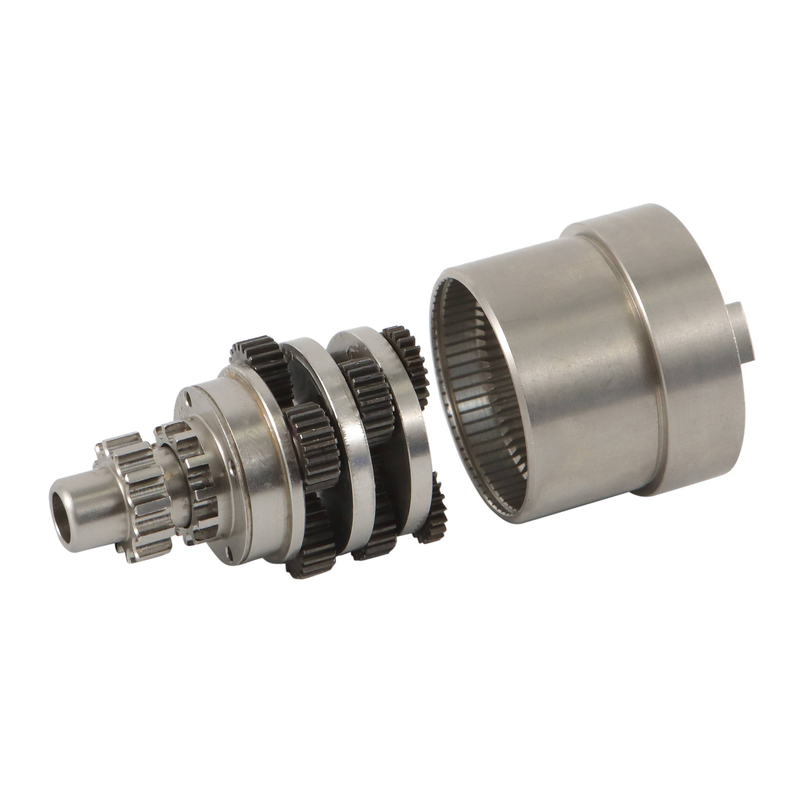
You see many companies leading the way in multi-speed transmissions for EVs. These brands focus on improving performance, efficiency, and cost for electric vehicles. The table below shows some of the top companies and their main contributions:
Company | Contribution |
|---|---|
Dana | Leading patent filer in multi-speed transmissions for EVs, enhancing performance. |
Cummins | Key patent filer in multi-speed transmission technology for electric vehicles. |
Porsche | Notable patent activity in multi-speed gearboxes for electric vehicles. |
I.CH also stands out as a brand that delivers advanced solutions for electric powertrains. You can find a wide range of products, from compact gear motors to robust multi-ratio transmissions. I.CH focuses on high torque, efficiency, and reliability, helping you meet the demands of modern EVs.
You can look at real-world examples to see how multi-speed transmissions change the driving experience.
The Dodge Charger Daytona EV features the eRupt multi-speed transmission, which enhances performance by widening the torque range and optimizing power delivery. It includes a 'PowerShot' function for an extra burst of power, improving efficiency and providing a dynamic driving experience.
The Porsche Taycan is equipped with a two-speed transmission that enhances driving dynamics. The first gear offers strong acceleration, while the second gear improves efficiency at higher speeds, showcasing the benefits of multi-speed gear technology in electric vehicles.
You also find new designs like the Ingear transmission from Inmotive. This system operates at over 99% efficiency and uses a morphing sprocket for smooth shifts. It gives you better launch acceleration and hill climbing, while a higher gear supports efficient cruising. These innovations help you get more range from your battery and lower the cost of ownership.
You will see more EVs using multi-speed transmissions in the next decade. Automakers now file more patents and develop new systems to boost acceleration and energy efficiency. By 2025, you can expect a shift to thermal-integrated drive units that improve battery range. Software-defined vehicles will let you adjust transmission performance in real time, making your driving experience smoother and more efficient.
Evidence Description | Key Points |
|---|---|
Sustainability Trends | Companies are adopting eco-friendly practices in manufacturing, addressing consumer demand for greener products. |
Consumer Preference Growth | The increasing preference for EVs is driving the market, with projections of 10 million units sold by 2025. |
Technological Innovations | Advancements like multi-speed transmissions enhance efficiency and performance, crucial for maximizing EV range. |
You benefit from these trends because they help reduce cost, improve torque delivery, and make electric vehicles more adaptable. Strategic partnerships and new regulations also push the industry forward. As a result, you get EVs that offer better performance, longer battery life, and lower cost.
You gain several advantages from multi-speed gearboxes in electric vehicles, such as improved powertrain efficiency, enhanced dynamic performance, and reduced energy consumption. These systems let motors operate in higher efficiency regions, which can increase your driving range. As innovation continues, multi-speed gearboxes will help make evs more accessible and appealing. When you consider your next electric vehicle, review how these advancements might fit your driving needs and lifestyle.
A multi-speed gearbox lets your electric vehicle use more than one gear ratio. You get better acceleration and efficiency because the motor can work in its best range at different speeds.
Yes, you can drive farther with a multi-speed gearbox. It helps your EV use less energy, especially at highway speeds or when climbing hills.
No, you will not hear much noise. Most modern multi-speed gearboxes use quiet designs and smooth shifting. You enjoy a comfortable ride.
You see multi-speed gearboxes in models like the Porsche Taycan and Dodge Charger Daytona EV. Some brands, like I.CH, offer advanced gearboxes for many electric vehicles.